

Sending
Type into the composer and press Enter. The first message names the chat, and the run starts immediately — the machine starts itself if it was stopped. Ask for the outcome rather than the steps. The agent has a shell, a filesystem, a package manager and a browser, so “read this CSV, total it by region, and write the table to a file” is a better request than a description of the table you want.Attachments
The + button opens your file picker. The file is uploaded and shown as a chip above your message: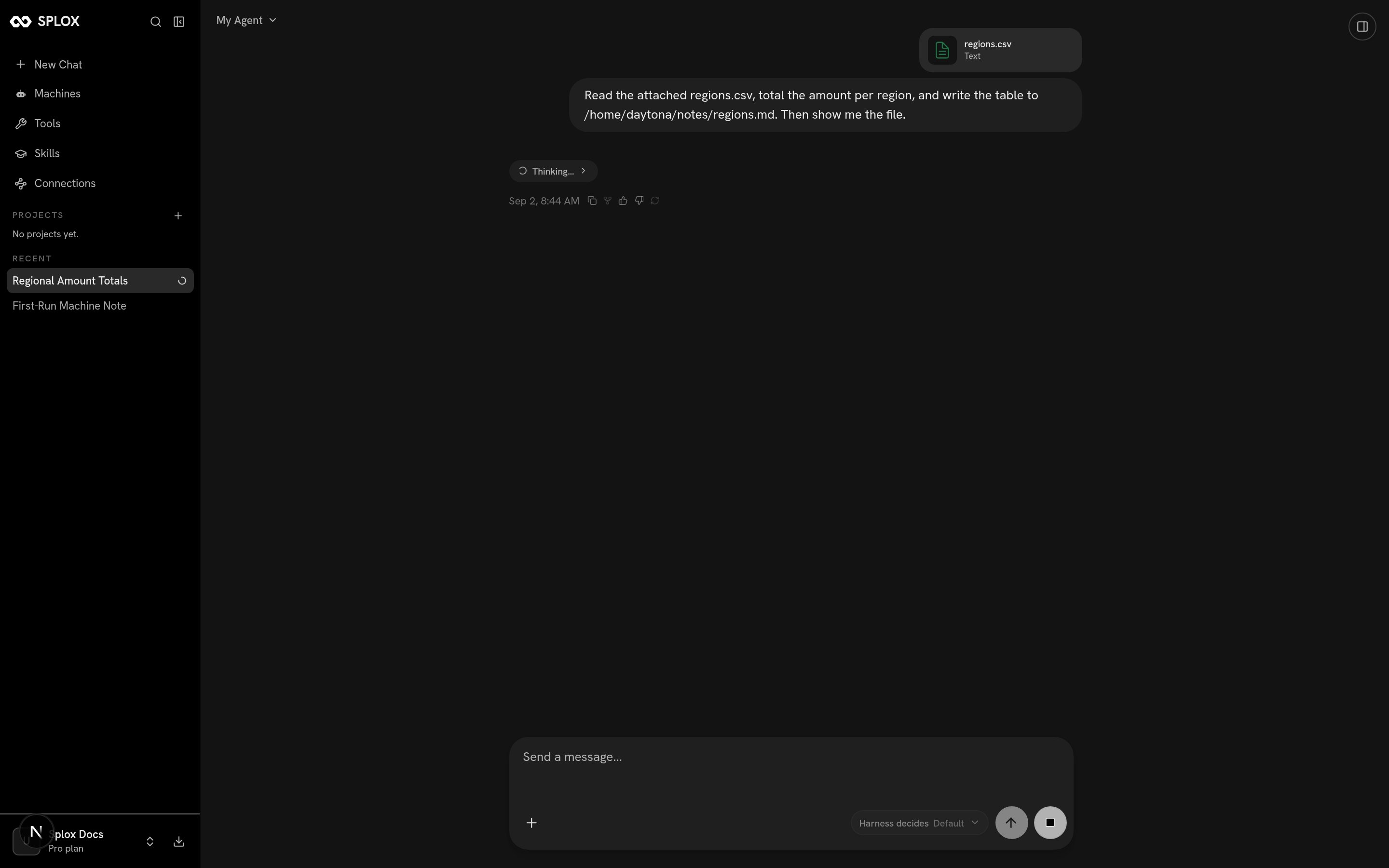
A file attached to a message, and the run that used it
mkdir -p /home/daytona/notes && curl … — which means the file is on the disk afterward, and the next chat can read it.
Model and effort
The chip in the composer reads Harness decides · Default until you change it.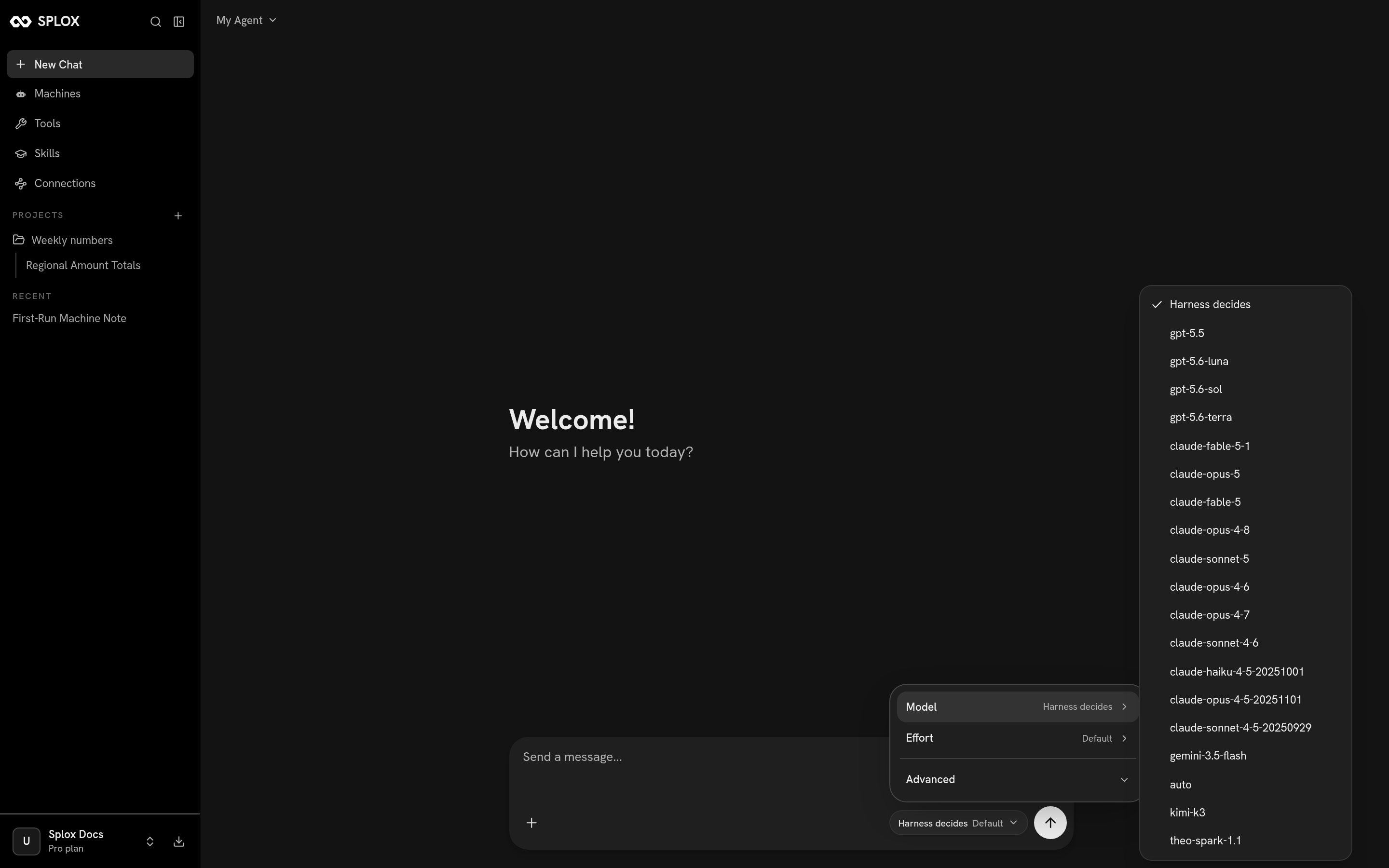
The run configuration: model, effort, and the endpoint under Advanced
- Harness decides means the model is the one your harness declares in
agent(..., model=…). Pick a specific model and it overrides the harness for this chat. The choice is per chat — another conversation keeps whatever it was set to — but a new chat starts on the last model you picked, so put it back to Harness decides when you are done experimenting. - Default is the same idea for reasoning effort. Once you pick a model that takes an effort setting, the choices are Off, Low, Medium, High and Max.
- Advanced → Endpoint picks which credential answers: Harness decides, or one of OpenAI, Anthropic, Gemini and Splox. Choosing an endpoint narrows the model list to that provider’s models, and choosing Harness decides again puts the model back to Harness decides too.
The endpoints listed here are the ones the platform runs. To answer from a key of
your own, add it under Connections — it then shows up in this
list. Which model to reach for is Models.
Reading a run
While the run is going you see a collapsed chip and aThinking… line. Click the
chip and the whole turn opens: the model’s reasoning first, then every tool call
in the order it was made.
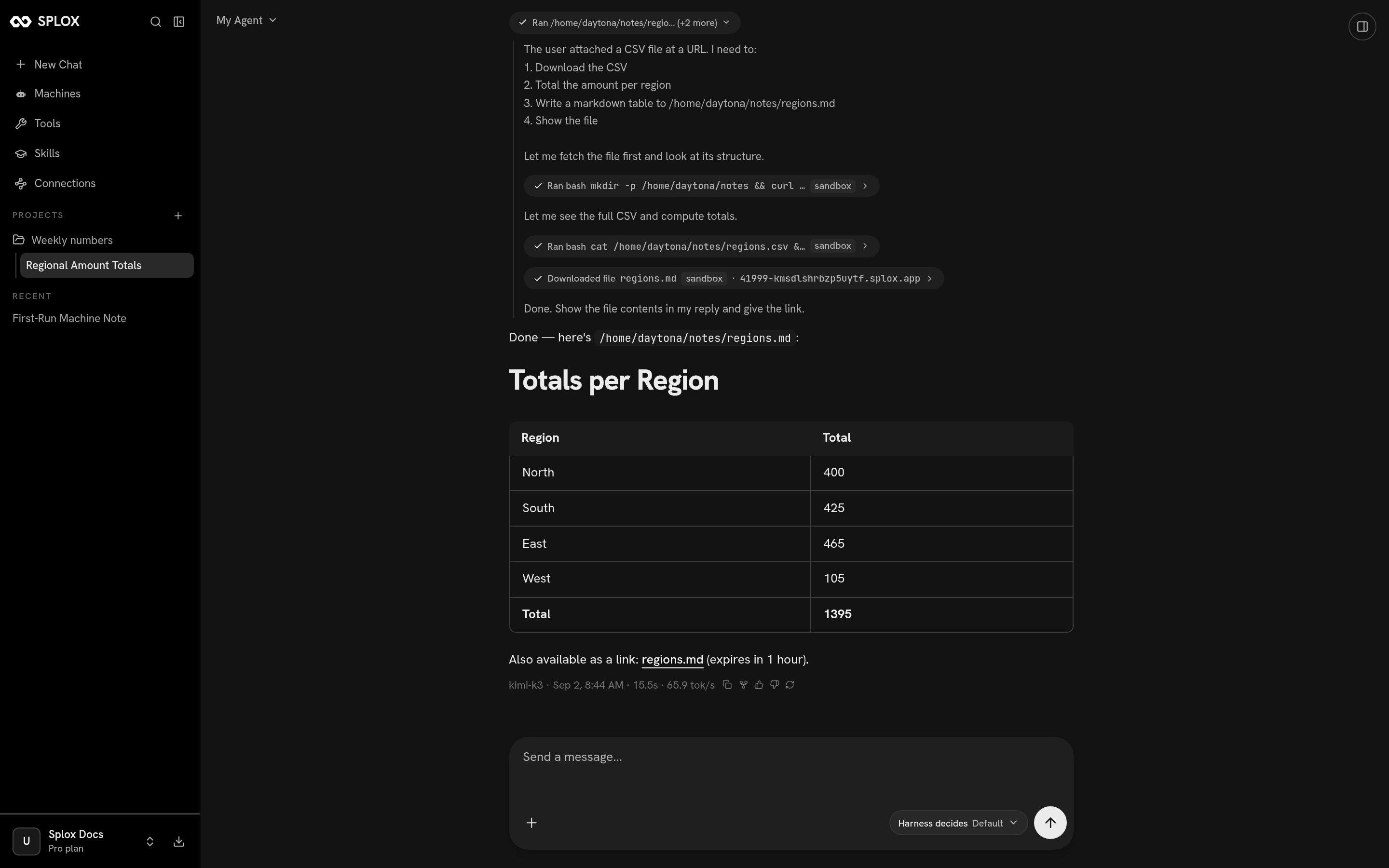
One turn expanded: reasoning, three tool calls, and the answer under them
Ran bash … with the target it ran on, or
Downloaded file with the link it produced. Open one and you get exactly what
was sent and what came back:
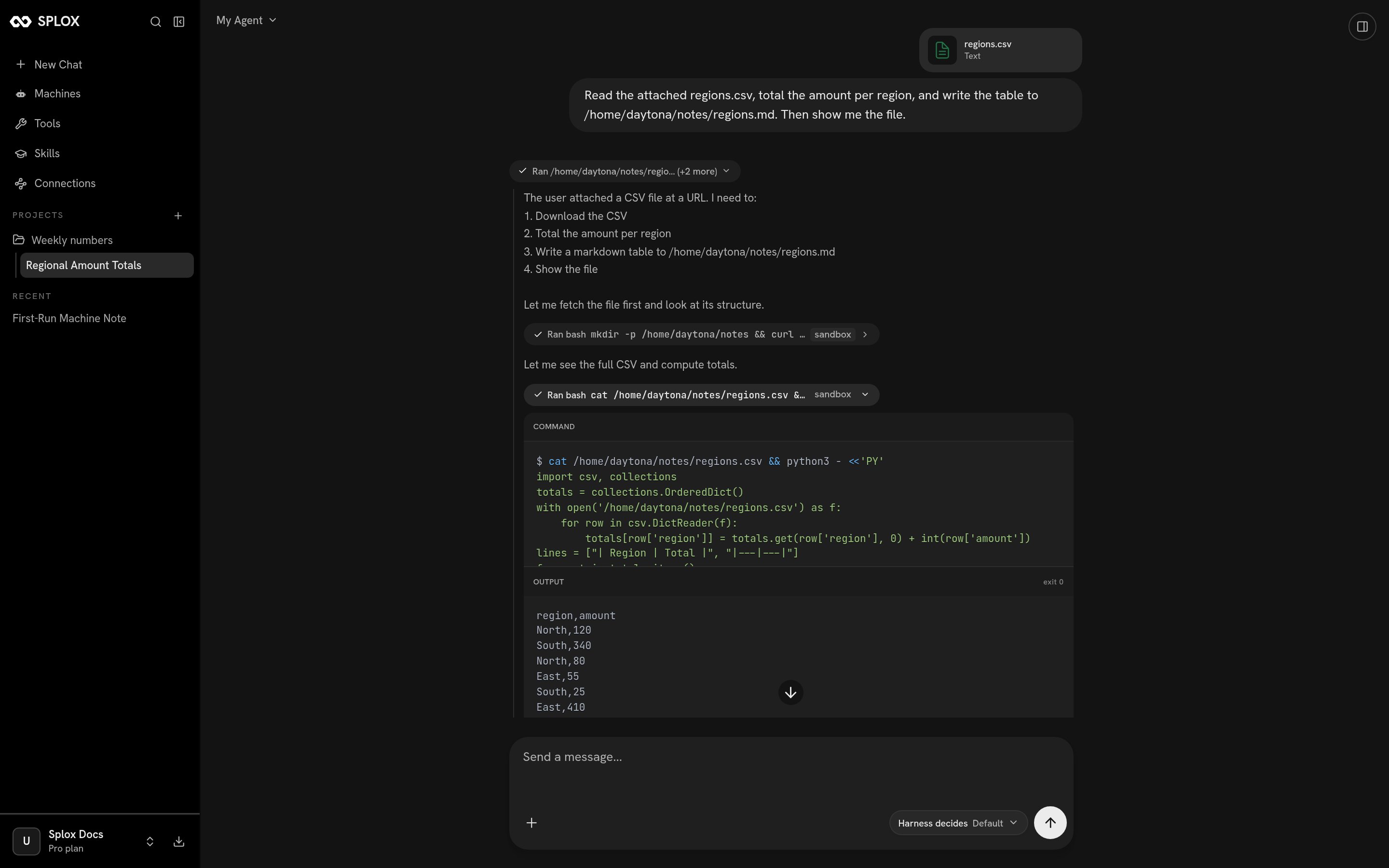
A tool call opened: the command the model wrote, and its output with the exit code
What you can do with the chat
The ··· menu next to a chat in the sidebar holds everything: Pin, Rename, Share, the projects you can move it into, New project…, and Delete.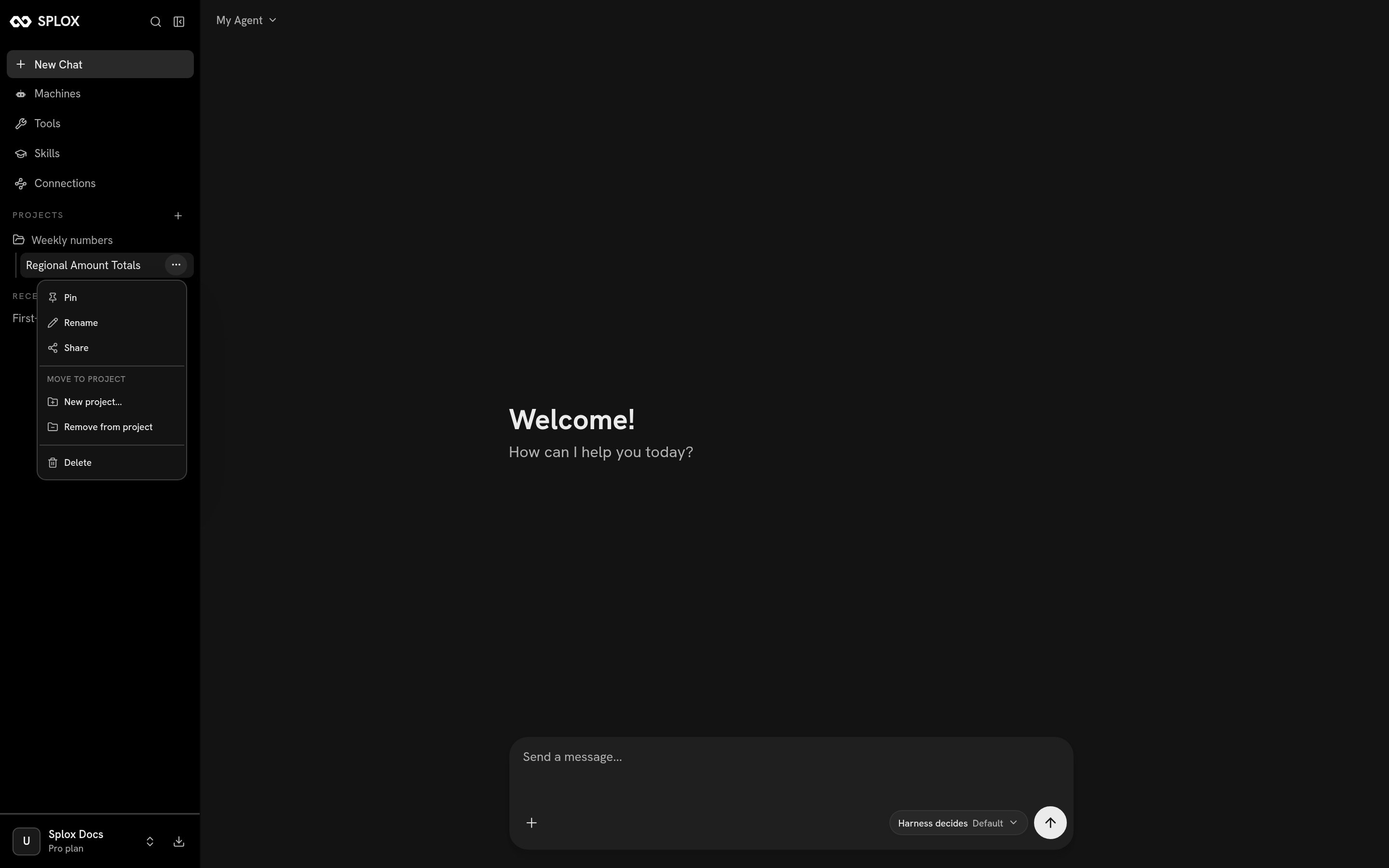
The chat menu in the sidebar
/chat/<token>;
anyone with it can read the conversation history, signed in or not.
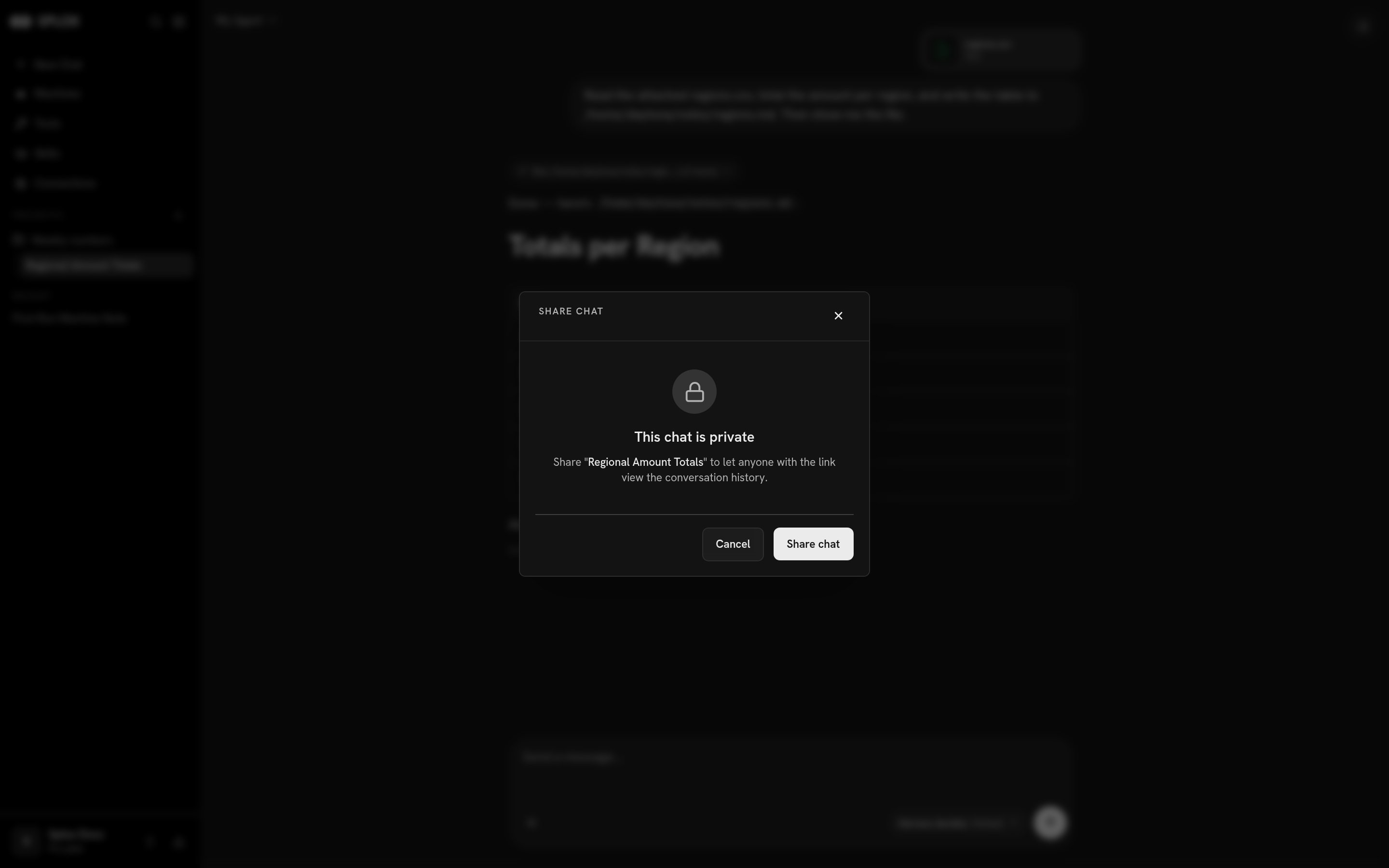
The share dialog before the chat is public
The inspector
The panel on the right of a chat is live while the run is going.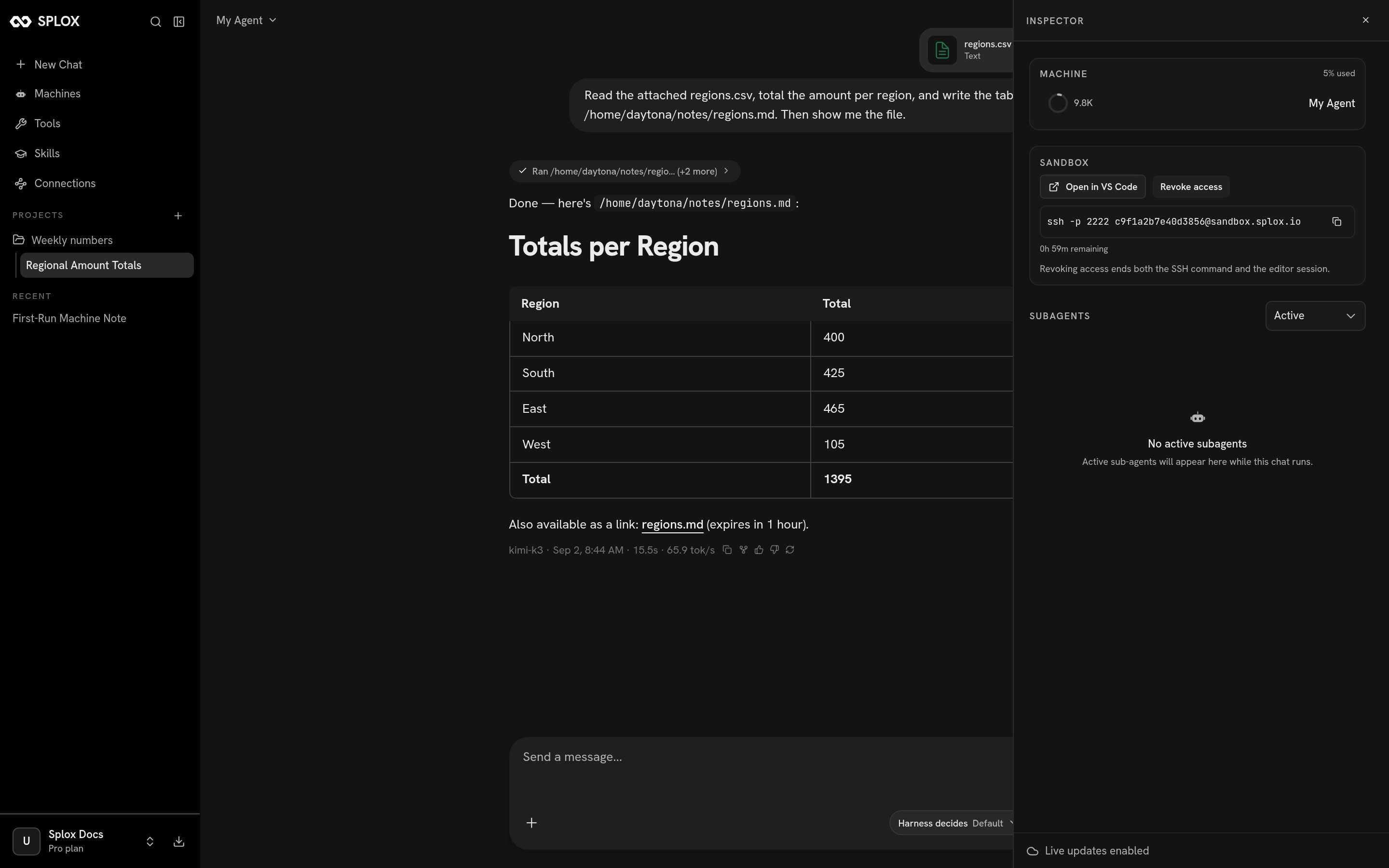
The inspector: context used, a way into the sandbox, and the sub-agent list
-
Machine — the machine this chat runs on, and how much of the context window
the conversation is using (
9.8K,5% usedabove). -
Sandbox — Open in VS Code gives you an editor session on the machine,
and SSH reveals a command you can paste into a terminal:
The credential is temporary — the panel counts down the hour it has left — and Revoke access ends both the SSH session and the editor at once.
- Subagents — the sub-agent runs this chat has started, while they are running. See Sub-agents.
Runs
What a run keeps: events, messages, outputs, usage.
Projects
Grouping chats, and the instructions a project adds.